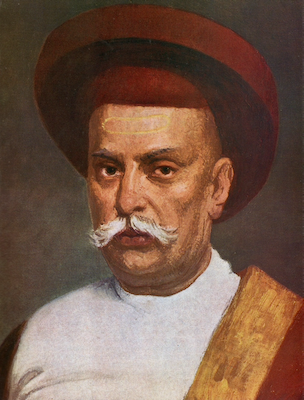
Walk Mumbai With Nana
Twelve stops, roughly 4km walkable in sections, south down the coast and a short jog to Byculla at the end. Nana didn't leave writings or a movement. He left places — this is the one part of him you can actually visit.
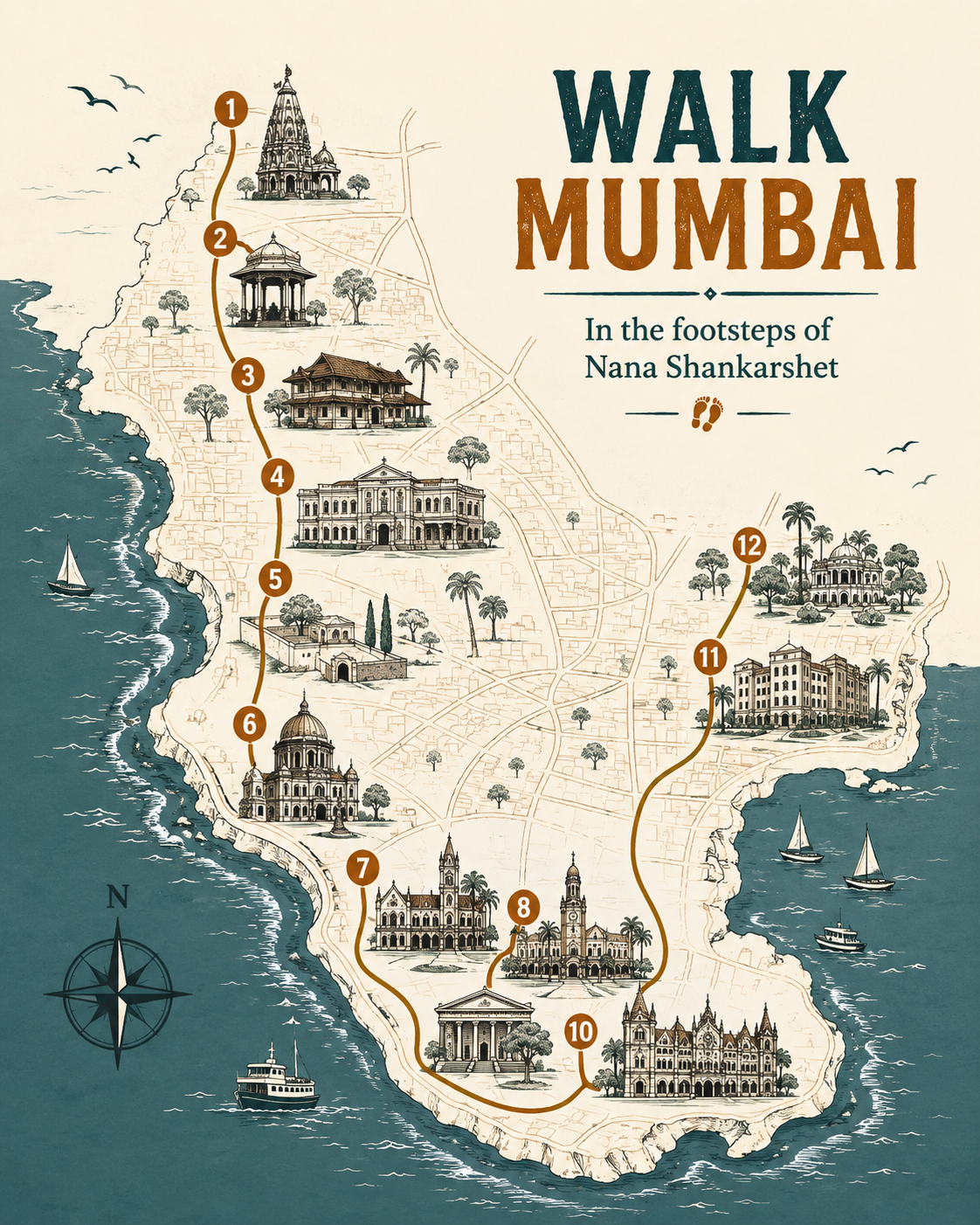
Embed your Google My Maps here (12 real GPS pins, in stop order).
This is the map people actually use standing on a street corner — accuracy over style.
Bhavani Shankar Temple, Tardeo
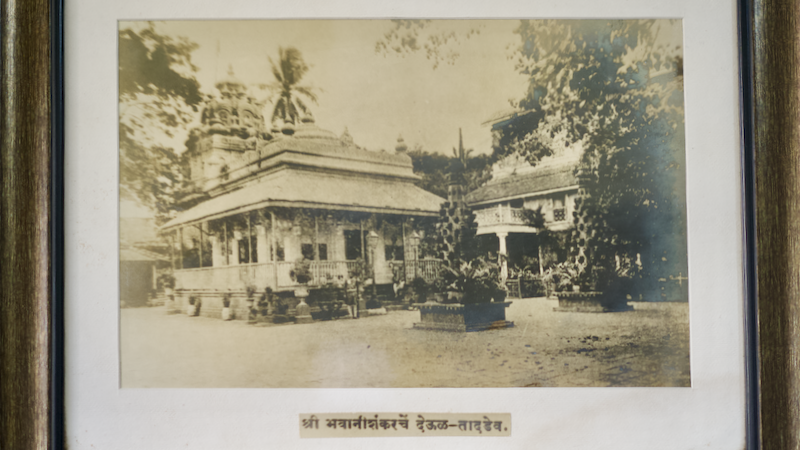
Built by Nana's father in memory of his mother, who died when Nana was three years old. It has stayed with the family for two centuries — not a museum piece, an active temple. Nana was a devout Hindu who never hid it, even as he spent his life making room for people outside his own community. Start the walk here, at the one stop that's about family rather than the city.
Built in 1806, this temple is 220 years old. The Gateway of India — the single most-photographed monument in Mumbai — wasn't finished until 1924. It's less than half this temple's age. The temple was already standing for over a century before the Gateway existed.
The temple was restored around 1997–2002 (accounts differ on the exact year), funded entirely by the Shankarsheth family, who still privately own it today — one of very few private temples left in Mumbai. Lata Mangeshkar's family lived in a bungalow next door, and she reportedly visited the temple daily before heading to record.
Family also built a shrine at each place they lived on the way to Mumbai — local tradition places one at Amruteshwar Temple, Ghodbunder Road, though the best-sourced account instead ties that one to the family's earlier home in Murbad.
Nana Chowk, Grant Road
A busy Mumbai junction that thousands cross every day, most without knowing whose name is on it. “Nana” — a term of affection, roughly “grandfather” — became attached to Jagannath Shankarsheth so completely that it eclipsed his given name. The chowk is one of the few places in the city where his name survives in daily use, spoken by people who've never heard of him.
One stop from here, Mumbai Central railway station has been waiting on a name change to “Nana Shankarsheth” since the state cabinet first approved it in 2020, re-approved in 2024, and it's still stuck awaiting Union government sign-off. Meanwhile the Metro just quietly did it: the Aqua Line's “Jagannath Shankar Sheth” station opened in October 2025, one stop away, no fanfare needed.
A flyover at Khodadad Circle — the junction everyone calls “Dadar TT” — has carried the name “Jagannath Nana Shankar Sheth Flyover” for at least 18 years, with no campaign, no ceremony, and no news coverage found. It was just already his.
The Girgaon Wada Site (Residence)
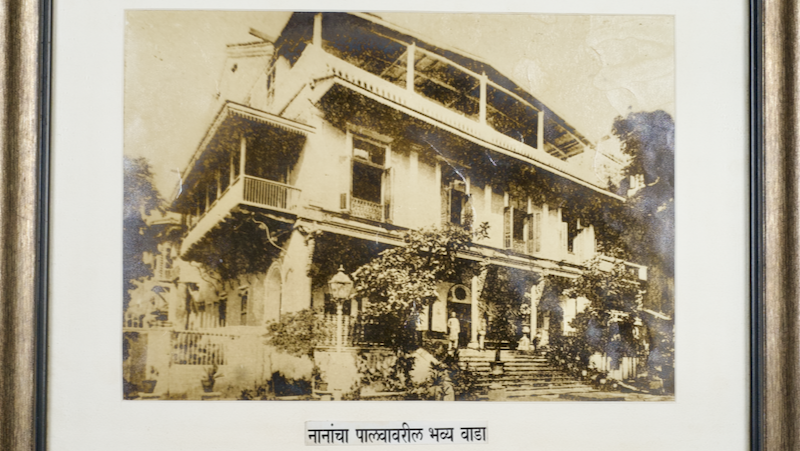
Where Nana actually lived — and where, on 31 July 1865, he died. This was also, by most accounts, where the girls' school ran that he opened on his own property; sources disagree on exactly when, somewhere between the 1830s and 1849. There's no dramatic monument to photograph here, which is its own kind of honest: this is where an ordinary domestic life happened, not a shrine.
Jagannath Shankarsheth School, Girgaon
Opened in 1857, specifically so that poorer families in Girgaon wouldn't have to send their children all the way to Elphinstone High School to get an education. It's a smaller, more local gesture than the grand institutions elsewhere on this walk — proof that his idea of education wasn't only about producing elites.
Bombay didn't get its own unified municipal government — the 1888 Act still largely the legal basis of today's BMC — until 31 years after Nana had already built, staffed, subsidized, and permanently endowed this school for the city's poor.
Sonapur Cremation Ground, Marine Lines
A crematorium he fought to protect. The British tried twice to shut it down; Nana beat them both times, once by leading roughly two thousand Koli fishermen to the Governor's bungalow to explain what the ground meant, and he personally funded the wall around it. His bust still stands at the gate.
Town Hall, Horniman Circle
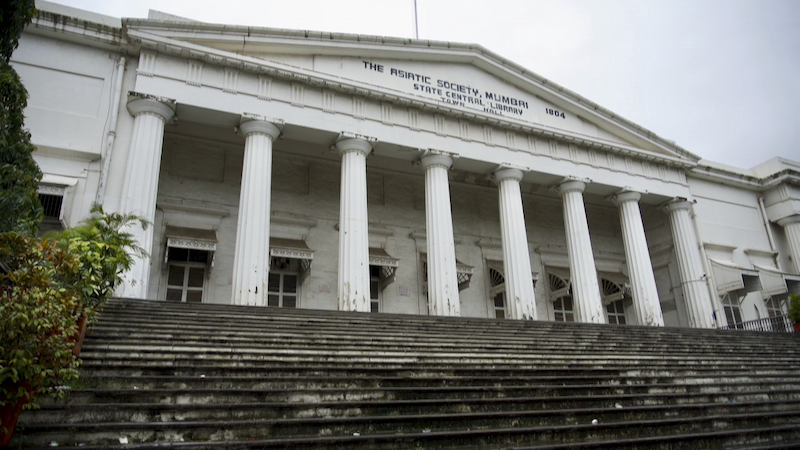
The white marble statue, sculpted by Matthew Noble in London and commissioned in 1864 — while Nana was still alive. It arrived in Mumbai in 1870, five years after his death, and was installed inside the Town Hall rather than outdoors as originally planned. Upstairs, the Asiatic Society's library holds books he personally paid for.
The usual version of this story is “he died, and a statue went up not long after.” What actually happened: at a Town Hall meeting on 9 March 1864, ₹25,000 was raised on the spot to commission it — while he was alive to hear about it. A delegation visited his home to ask him to sit for photographs and send his robe, turban, and shoes to the sculptor in London. He was personally fitted for his own memorial statue before he died. It then took another five years to arrive.
Per Namdar Jagannath “Nana” Shankarsheth (Amar Shende) — needs independent corroboration beyond the book.
The Asiatic Society library, in this same building, holds one of only two known illustrated manuscripts of Dante's Divine Comedy in the world. In the 1930s, Mussolini's government offered £1 million to have it “returned” to Italy. The Society said no.
Not about Nana directly — the building his statue stands in.
Elphinstone College, Kala Ghoda
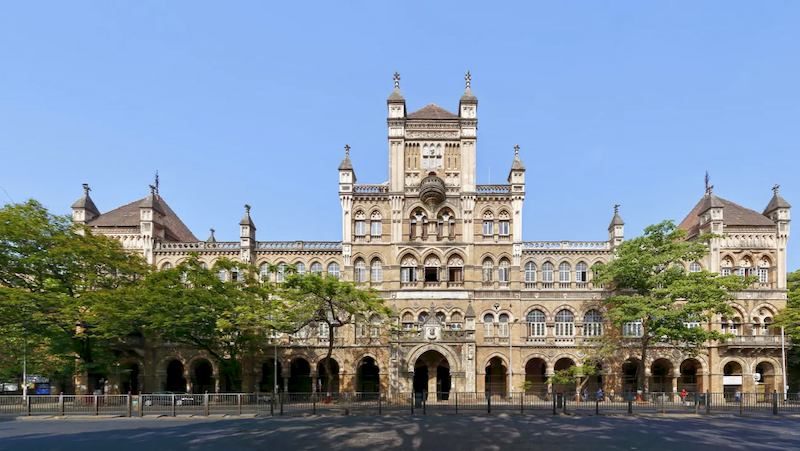
He chaired the fund that built it. Its alumni became modern India's makers: Dadabhai Naoroji, Justice Ranade, R.G. Bhandarkar, Pherozeshah Mehta, Tilak, and Gokhale all studied here. Nana never attended a college like this himself — he built one so others could.
Elphinstone was constituted as its own college in 1856 — five years before MIT's own founding charter, and nine years before MIT held its first class. It's not the oldest college in India (Calcutta's Hindu College beats it by decades), but it predates the institution most people reach for as the global gold standard.
University of Mumbai, Fort
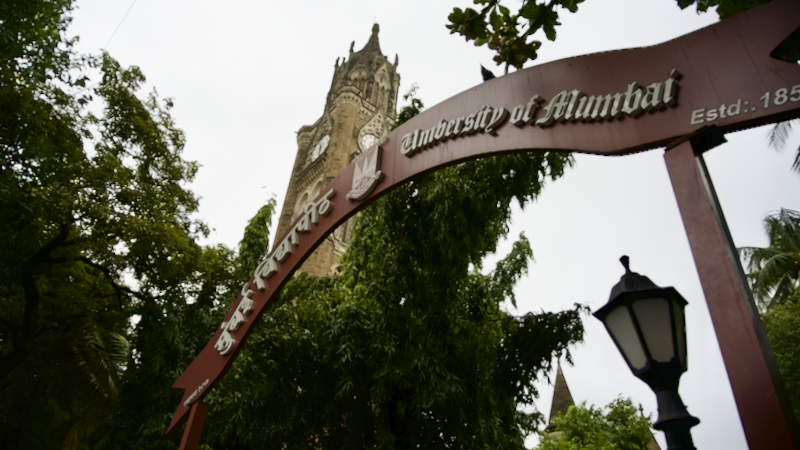
Nana was a Founding Fellow in 1857 and served until his death in 1865. He didn't just fund the university; he argued about its curriculum for years — a duller kind of commitment than donating money, and a rarer one.
A university Nana sat on the Senate of until he died is older than Stanford by nearly three decades, and older than the University of Tokyo — Japan's most prestigious — by twenty years.
Sir J.J. School of Art
He sat on the committee that created it. Today it's one of India's most respected art schools — a lineage that runs back to a civic committee Nana helped chair a century and a half ago.
CSMT / Boribunder
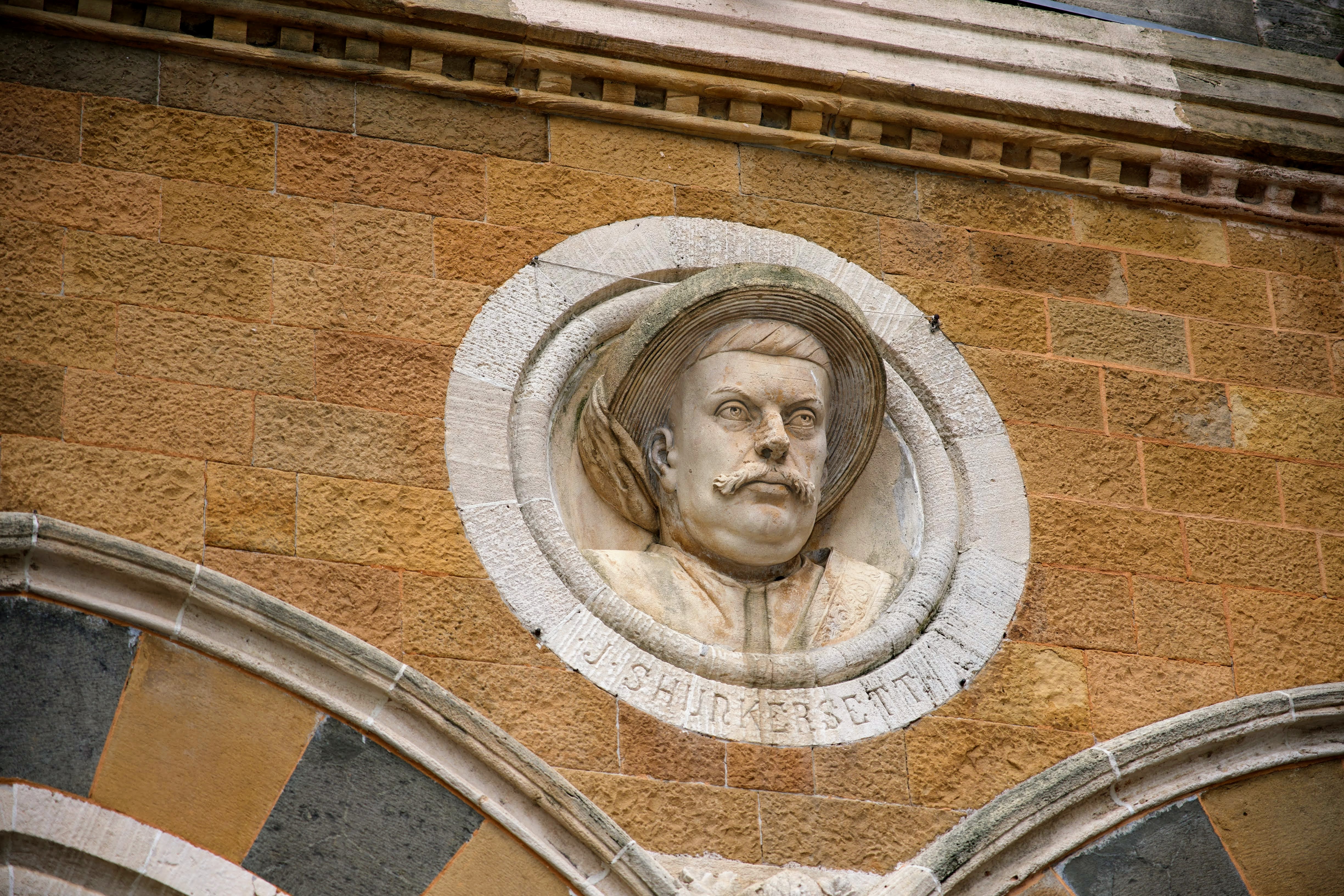
On 16 April 1853, India's first train left from here, bound for Thane — and Nana was aboard, having spent a decade making the railway happen before anyone in London had proposed the idea. Look up at the station facade: his is the only Indian face on it. A fitting place to pause — looking up at something three million people pass under every day without noticing.
This train — 3 locomotives named Sahib, Sindh, and Sultan, 14 carriages, 400 passengers, a 21-gun salute — ran nineteen years before Japan had any railway at all. The country most people associate with fast, precise trains didn't have track when Bombay already did.
Grant Medical College & J.J. Hospital, Byculla
He proposed the memorial to Sir Robert Grant that became the college, and funded scholarships so students could study medicine in Marathi rather than only in English — widening who could actually become a doctor, not just who could afford to.
Rani Baug & Bhau Daji Lad Museum, Byculla
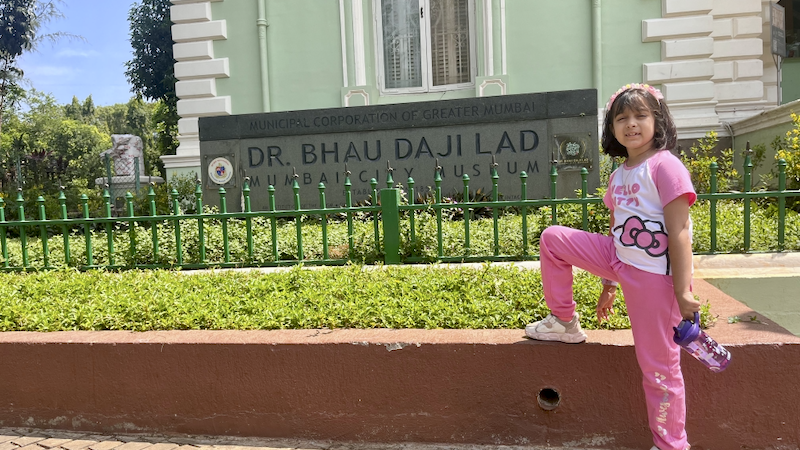
He chaired the Agri-Horticultural Society for 35 years, the body behind this garden and the museum beside it. His last public speech, two weeks before he died in 1865, was fundraising for this exact garden. A fitting place to end: forty-five years of unglamorous committee work, still growing.
Most people picture the Prince of Wales Museum (now CSMVS, opened 1922) as Mumbai's old museum. The Bhau Daji Lad Museum here — which Nana was central to founding — opened fifty years earlier, in 1872. It's Mumbai's actual oldest museum, and India's third oldest. He died seven years before it opened.
Town Hall Statue
Commissioned on 9 March 1864 during Sunkersett's lifetime by public subscription raising Rs 25,000. Sculpted in London by Matthew Noble; arrived in Mumbai on 2 March 1870 on the ship British Nation.
CSMT Facade Bust
Carved in the late 19th century by students of the Sir J. J. School of Art as part of the architectural ornamentation of the terminus.
Sonapur Cremation Ground Bust
Erected at the entrance gate on land Sunkersett fought twice to protect from British shutdown and eventually secured for native cremation rights.
Nana Chowk Bust
Unveiled on 26 July 1995 by Balasaheb Thackeray at the busy South Mumbai intersection.
Antop Hill Smarak Bust
Unveiled in August 2015 to commemorate Sunkersett's 150th death anniversary. It forms the first phase of an ongoing government-led memorial park.
Elphinstone College Library Painting
Installed in the historical Library Hall to celebrate Sunkersett's legacy as a co-founder of the Elphinstone Institution.
Sir J. J. School of Art Portrait
Unveiled on 10 February 2025 (his 222nd birth anniversary) by Sunkersett's descendants and the Director of Art to honor his role on the founding committee.
BMC Corporation Hall Portrait
Originally installed on 28 March 1938 via a petition by his grandson Rawji Shankarsheth. In the devastating June 2000 fire that gutted the entire Corporation Hall, Sunkersett's portrait miraculously survived the blaze untouched while other paintings were completely destroyed.
Jagannath Nana Shankarsheth Flyover
Major overpass crossing the Dadar TT junction on Dr. Babasaheb Ambedkar Road.
Jagannath Shankarsheth Marg (J.S. Road)
The historic arterial street passing through Girgaon and Kalbadevi.
Shankarsheth Road (Swargate)
A major, bustling commercial arterial road in Pune.
Jagannath Shankar Sheth Metro Station
Underground station serving Mumbai Metro Aqua Line 3, inaugurated on 8 October 2025 by PM Modi.