Grand Jury & Justice of the Peace (J.P.) Rights (1826–1834)
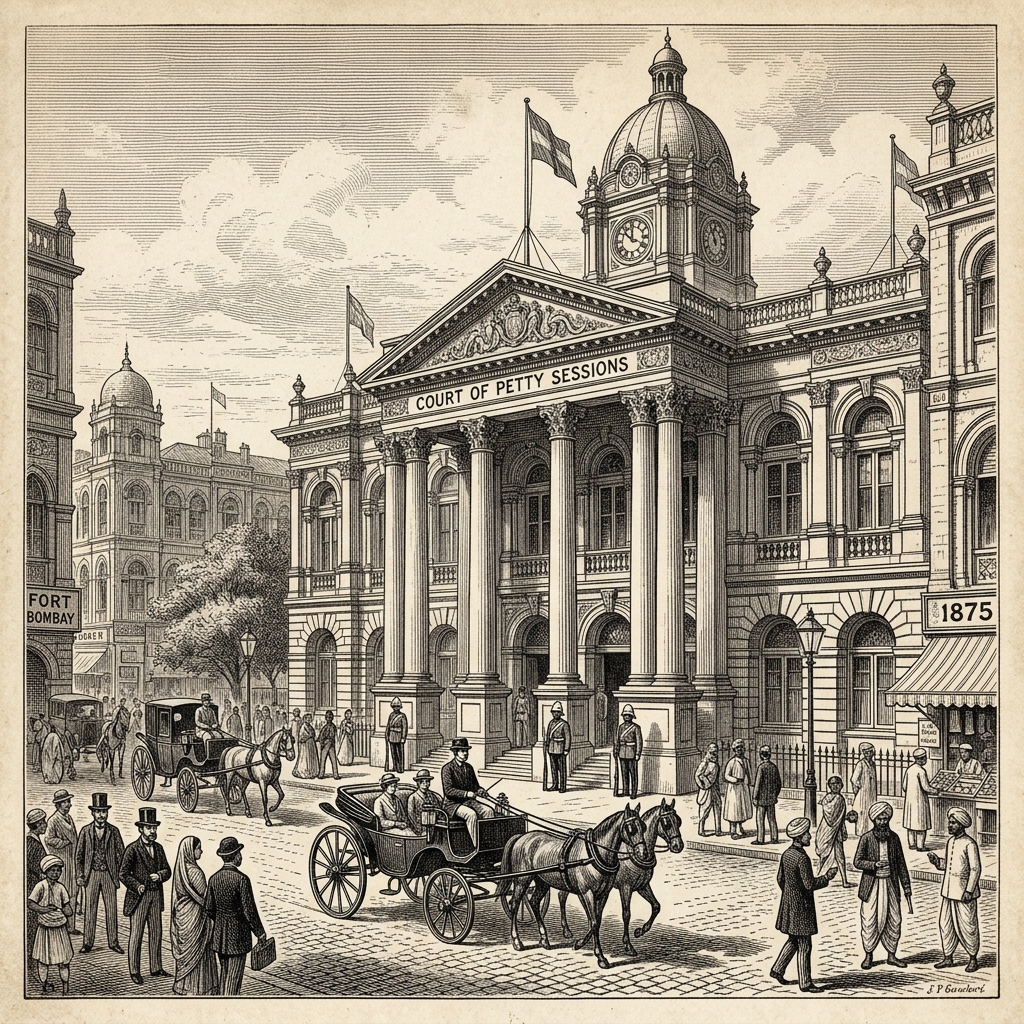
OLD COURT OF PETTY SESSIONS, FORT
In the 1820s, the British judicial system in Mumbai was entirely monopolized by Europeans. Only white men were appointed as Justices of the Peace (J.P.s) or allowed to sit on the Grand Jury and Petty Sessions, meaning Indians were entirely at the mercy of European judges and juries, even in cases involving their own countrymen.
Beginning in 1826, Nana Shankarsheth launched a relentless, six-year campaign to break this racial monopoly. He drafted petitions, mobilized local leaders, and activated his trade contacts in London (such as Sir Charles Forbes) to lobby the British Parliament directly.
His persistence broke the colonial glass ceiling. In 1828, Indians were finally granted the right to sit on the Grand Jury. In 1834, the British Parliament yielded further, appointing the first 13 Indian Justices of the Peace—with Nana Shankarsheth’s name at the very top of the list. Nana subsequently became the first Indian Magistrate to preside over the Petty Sessions Court, a monumental victory for native self-governance and judicial equality.