The Sheshadri Case and the Fight Against Forced Conversions (1842)
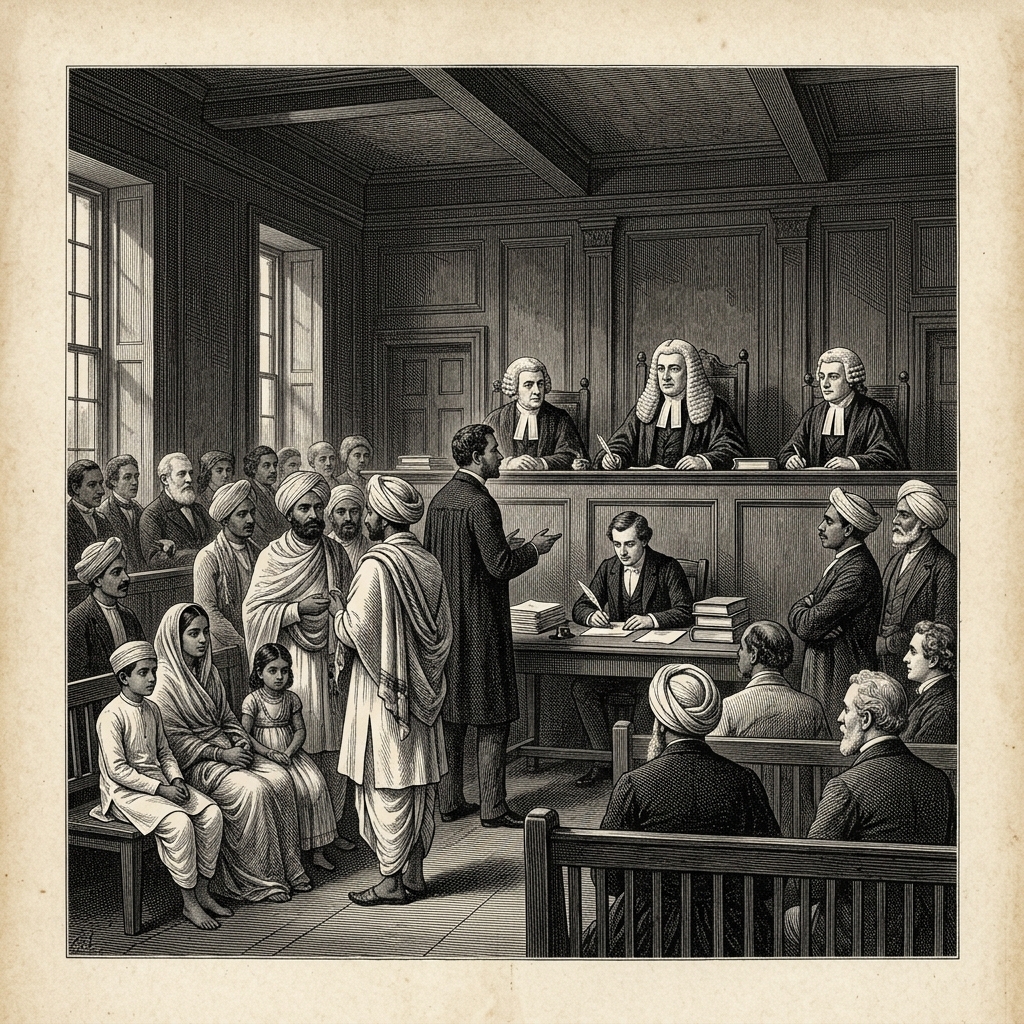
SUPREME COURT OF BOMBAY (1842)
The influx of Christian missionaries in the 1820s and 1830s brought modern education to Mumbai, but it also brought aggressive proselytization. The tension peaked in 1842 with the highly publicized Sheshadri case. Narayan Sheshadri, a young Brahmin teacher at a missionary school, converted to Christianity and took his 12-year-old minor brother, Shripat, to live with him under the care of Reverend Nesbit. The orthodox Hindu community was paralyzed by fear and outrage, but it was Nana Shankarsheth and Acharya Balshastri Jambhekar who took decisive legal and social action to rescue the minor.
Realizing that the lower magistrate courts were biased toward the missionaries, Nana and Jambhekar filed a _Habeas Corpus_ petition in the Supreme Court. They won the landmark legal battle, forcing the missionaries to return the 12-year-old Shripat to his father. However, the battle was only half-won. Because Shripat had lived and eaten with Christians for two months, the orthodox Brahmins of Pune declared him "corrupted" and demanded his permanent excommunication.
Refusing to let Hindu society be weakened by its own bigotry, Nana and Jambhekar defied the orthodox establishment. They sent Shripat to Kashi (Varanasi) for a formal purification ritual (Shuddhikaran) to readmit him into the Hindu fold—the first such reconversion during British rule. The orthodox backlash was severe: Pune Brahmins fined the participants, and Jambhekar was forced to undergo penance. Yet, Nana, leveraging his immense wealth and social standing, stood firm, absorbing the financial losses and shielding the reformist movement from conservative collapse.