Holding the Peace: The 1851 Bombay Riot
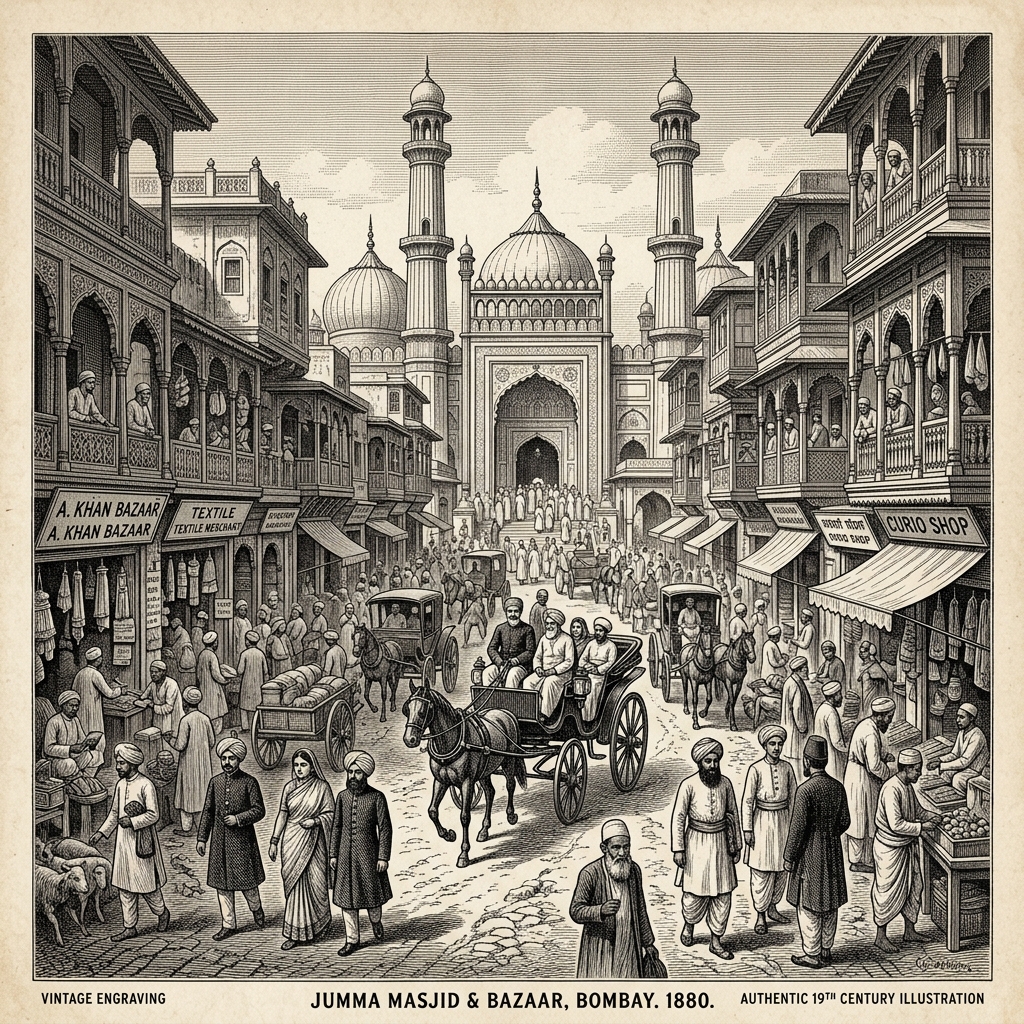
JUMMA MASJID AREA, BOMBAY
In October 1851, Mumbai was engulfed in a violent communal riot sparked by a printing error. Bairamji Casatji, a Parsi editor of the educational newspaper _Chitradnyanadarpan_, published a lithograph of the Prophet Muhammad. Due to an excess of ink during printing, the Prophet appeared blind in the image. An enraged mob pasted the image on the doors of the Jumma Masjid, sparking a massive riot where Muslims began attacking Parsis and looting shops. With only 700 police officers to protect a city of 700,000, the British authorities lost control of the streets.
As the violence escalated, the Parsi community sought refuge, and the city's Hindu population prepared to join the fray against the rioters. Recognizing that a retaliatory strike by the Hindu majority would plunge Mumbai into an uncontrollable bloodbath (a precursor to the devastating 1874 riots), Nana Shankarsheth intervened directly. He personally patrolled the riot-affected neighborhoods, using his unparalleled influence to restrain the Hindu community and prevent them from joining the Parsis in a counter-attack.
Simultaneously, Nana worked tirelessly to broker peace between the Parsi and Muslim leaders. On November 30, 1851, after securing a formal apology from the Parsi editor, Nana organized and led a historic peace procession. Riding in a convoy of eighteen carriages through the riot-torn streets alongside British officials (Lumsden and Sir Erskine Perry) and the Muslim Qazi, Nana broadcasted the message of peace, successfully ending the riots and saving the city from further destruction.