Pandharpur Temple Entry and Egalitarian Reforms
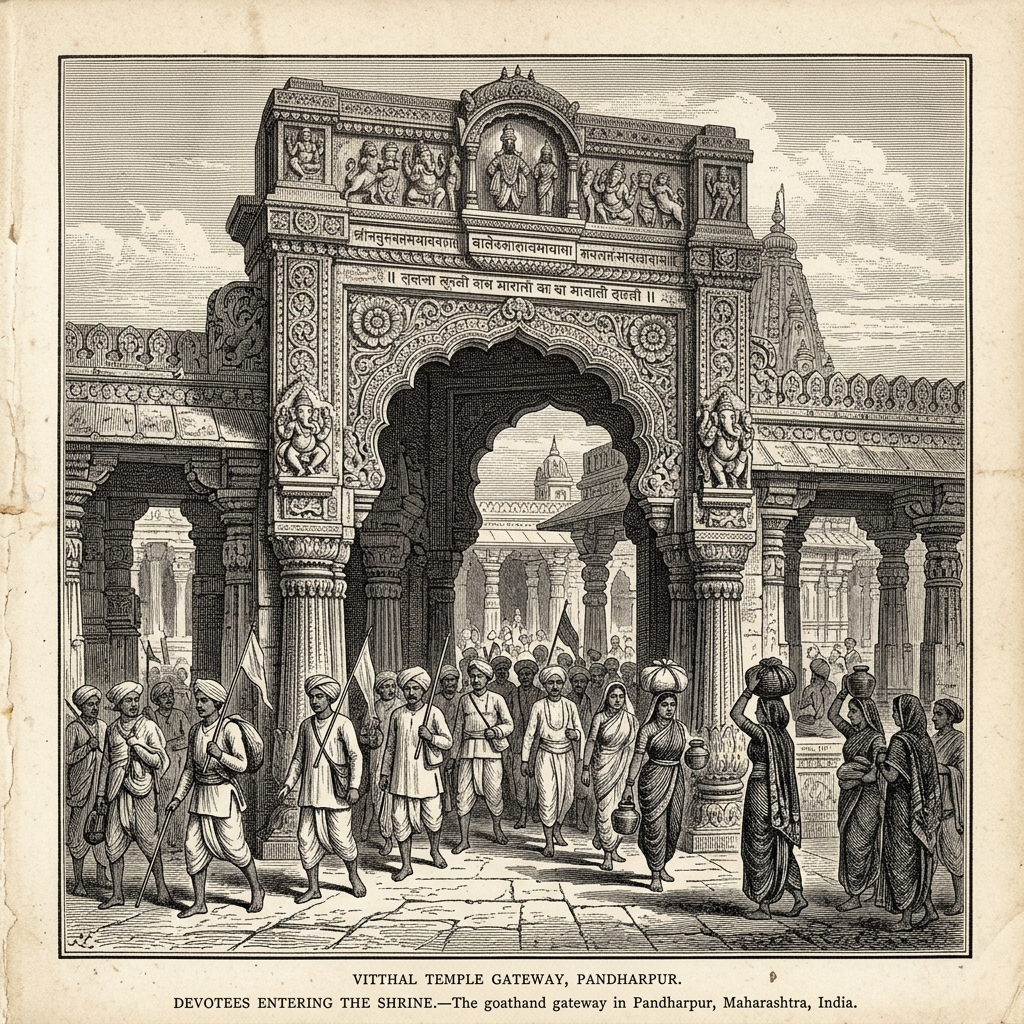
VITTHAL TEMPLE ENTRANCE, PANDHARPUR
Nana Shankarsheth’s vision for Hinduism was deeply egalitarian, putting him at odds with both colonial administrators and orthodox priests. During a severe epidemic, the British government imposed a strict ban on _devdarshan_ (divine viewing) at the sacred Vitthal Temple in Pandharpur to prevent the spread of disease during the Ashadhi and Kartiki Yatras. Recognizing the economic devastation this caused to local traders and the spiritual heartbreak of the pilgrims, Nana personally met the Governor. He successfully negotiated the lifting of the ban by ensuring that strict health and disease-prevention measures were implemented instead of a blanket closure.
While resolving this crisis, Nana observed a glaring social injustice: non-Brahmins were prohibited from entering the inner sanctum of the Vitthal Temple and were forced to take _darshan_ from outside the door. Deeply opposed to caste-based exclusion, Nana initiated efforts with the Governor and temple authorities to open the temple doors to all devotees, regardless of caste.
This ideological battle laid the early groundwork for the temple entry movements that would follow decades later, such as the Vaikom Satyagraha. His relentless push for the upliftment of the backward classes earned him the profound admiration of Mahatma Jyotiba Phule, who praised Nana’s noble and generous nature, noting that Nana fiercely advocated for the education and rights of the lower classes within the Board of Education.